Best Indianapolis Roofers: Winter Replacement Guide 2026
Best Indianapolis Roofers: Winter Replacement Guide 2026
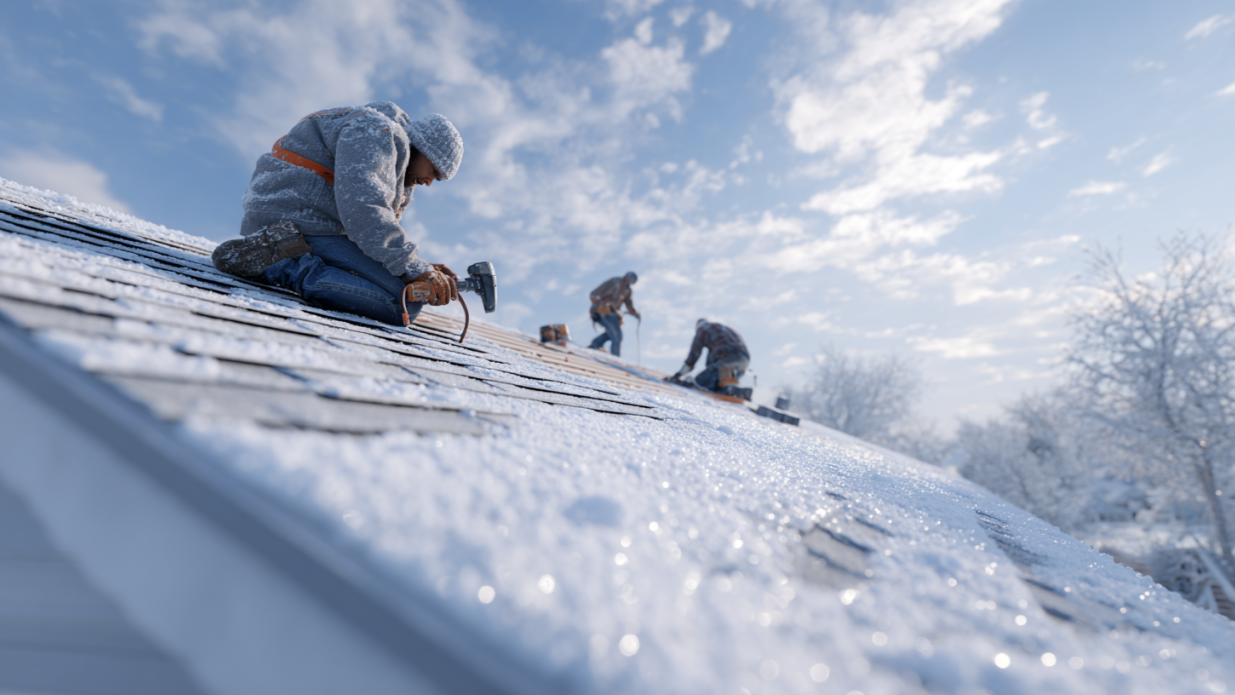
Best Indianapolis Roofers: Winter Replacement Guide 2026
Replacing a roof in Indianapolis during winter sounds like one of those ideas you pitch and everyone in the room quietly judges you for.
Until you actually need it.
A leak doesn’t care that it’s January. A tree limb doesn’t wait for “roofing season”. And if your shingles are already curling or you’ve got soft spots in the decking, pushing it to spring can turn a manageable job into a whole new mess. Wet insulation. Mold. Ceiling stains that spread like a time lapse video.
So this guide is for the real situation. You’re in Indy. It’s cold. You might still need a roof replacement from reliable Indianapolis roofers. Or at least a serious repair. And you want roofers who show up, don’t cut corners, and know how winter changes everything.
I’ll walk through what’s different about winter roof replacement in 2026, what you should ask, the red flags I keep seeing, and how to shortlist the best Indianapolis roofers for a winter job without getting talked into stuff you don’t need.
First, can you replace a roof in Indy winter?
Yes. Usually.
Asphalt shingles, metal, and some flat roofing systems can all be installed in winter with the right approach. The limitation is less “can it be done” and more “can it be done correctly, with the right materials, on the right days, by a crew that actually knows winter procedure”.
Indianapolis winter is not just “cold”. It’s freeze thaw. It’s wind. It’s morning frost on the deck. It’s surprise snow, then a random 44 degree day, then back to 18 degrees. That swing affects adhesives, underlayment handling, sealant curing, and even how brittle shingles are when they’re being cut and nailed.
So yes. Winter roofs happen all the time here. But the installer matters more than the season.
What changes in winter, specifically?
A few things, and none of them are small.
Shingle sealing takes longer
Most asphalt shingles rely on a self-sealing strip that bonds with heat. In winter, that seal can take longer to activate, especially on north-facing slopes with limited sun. Roofing in winter requires careful planning, which a good roofer will understand and prepare for. They may use hand sealing in certain conditions or schedule installation to maximize sunlight exposure for sealing. They also ensure the roof is properly fastened so wind doesn’t lift unsealed shingles in the meantime. If a roofer tells you “doesn’t matter at all”, I’d pause.
Materials get brittle
Shingles can crack more easily in cold temps. Same with some flashing materials. Cutting and bending has to be done carefully, and the crew needs to store materials properly. Not in a snowy driveway for three days.
Underlayment and ice protection become the star of the show
Winter replacement is not just about shingles. It’s about what’s underneath. In Indy, ice dams are a real risk, especially if you have uneven attic insulation, poor ventilation, or complicated roof lines with valleys and dormers. A winter replacement is the perfect time to do ice and water shield correctly, in the right locations, with clean detailing.
Scheduling and safety are tighter
Roofing in winter is slower. Shorter days. More weather delays. More safety risk. Crews should be using fall protection and keeping the deck clear. If you see a company that rushes the tear-off while snow flurries are coming in sideways, that’s not “efficient”. That’s how you get exposed decking and panicked tarps.
The quick reality check: should you replace or repair?
In winter, this question matters because repairs can be a smart stopgap. But they can also be a money pit if your roof is already done.
Here’s a practical way to think about it.
A repair is usually enough if:
- The roof is under about 10 to 12 years old and otherwise in decent shape
- Damage is isolated (a few missing shingles, a small flashing issue, a single pipe boot failure)
- You have no widespread granule loss, no sagging, no recurring leaks
- Your roofer can show you the specific failure point, not just point vaguely at “storm damage”
Replacement starts making more sense if:
- Roof is 15 to 25 years old (or unknown age and looks tired)
- Multiple leaks or repeated repairs in the same area
- Widespread curling, cracking, missing tabs, exposed fiberglass mat
- Soft decking spots, visible sag between rafters
- You’re seeing ice dam damage and water intrusion around eaves and valleys
- The contractor finds multiple layers or bad ventilation issues that need a reset
If you’re on the fence, a good Indianapolis roofer will give you both options with pricing and risk. Not guilt. Not urgency theater.
What “best Indianapolis roofers” actually means in winter
People say “best” but usually they mean some combination of:
- They answer the phone and don’t disappear
- They can schedule within a reasonable window
- They do clean work and don’t leave nails everywhere
- They pull permits when needed
- They handle insurance claims without turning it into a circus
- They have winter experience and don’t treat your house like a practice run
- They have real local references, not just a national review profile
In winter, I’d add two more:
- They understand ventilation and ice dam prevention, not just shingle installation
- They have a clear weather plan, including how they protect the home mid job if conditions turn
A simple checklist to screen Indianapolis roofers (winter edition)
If you only do one thing, do this. Ask these questions. Listen to how they answer, not just what they answer.
1. “Do you install roofs in winter every year in Indianapolis?”
You want a calm yes, with specifics. Not a hesitant “we can”.
2. “What temperature range do you prefer for asphalt shingle installs?”
There’s no single magic number, but you’re listening for awareness. They should talk about manufacturer specs, sealing, brittleness, and choosing the right day.
3. “How do you handle sealing in cold weather?”
Look for mention of hand sealing when appropriate, correct nailing patterns, and post install wind considerations.
4. “Where will you install ice and water shield, and why?”
If they say “everywhere” without explaining, that’s not automatically good. Full coverage can be appropriate for certain low slope situations, but many homes need it at eaves, valleys, penetrations, and other critical areas. They should explain your roof layout.
5. “Will you inspect attic insulation and ventilation?”
Winter roofing in Indy is tied to attic performance. If they won’t even look, they’re missing the root of a lot of ice dam problems.
6. “Who is the actual crew? Employees or subcontractors?”
Both can work. The key is accountability and consistency. If they use subs, ask if they’re the same crews year round and who supervises.
7. “What’s your plan if weather turns mid tear off?”
They should describe staging, tarps, deck protection, and how they time tear off to avoid exposure.
8. “Can you provide a local address list of recent winter jobs?”
They may not give exact addresses for privacy, but they should be able to provide references, neighborhoods, or contactable homeowners.
Red flags I see a lot (and they get worse in winter)
- One quote, no details. Just a number. No scope. No underlayment type. No ventilation mention.
- Pressure to sign today because ‘winter discounts end tonight’. Roofing is not a timeshare.
- They won’t get on the roof or into the attic. Then what are we even doing.
- Insurance talk before inspection. If the first sentence is “we can get this bought by insurance”, be careful.
- No warranty clarity. You want workmanship warranty in writing, plus manufacturer warranty info.
- They downplay ventilation. Ice dam city. Mold city. Shortened roof life city.
Roof types in Indianapolis and what I’d choose for winter replacement
Asphalt shingles (most common)
Still the go to for most Indy homes because it’s cost effective and repairable.
For winter, I’d lean toward:
- Architectural shingles (not 3 tab, in most cases)
- A reputable manufacturer line with strong wind rating
- Synthetic underlayment plus ice and water shield in critical areas
- New pipe boots and flashing instead of “re using if it looks ok”
Metal roofing
Metal can be a great Indy option, especially if you plan to stay long term. Snow sheds easily. Lifespan is strong. But it costs more up front and detailing matters a lot.
Winter installs are doable, but you want a roofer who really does metal, not someone who “also offers metal”.
Flat and low slope roofs
Common on certain additions, porches, and some older homes. Winter replacements here are about membrane choices, seams, and drainage.
If you have a low slope area, make sure the roofer is not just slapping shingles where shingles should not be. You’d be surprised how often that happens.
Winter replacement timeline: what it looks like in real life
People imagine the roof is off for weeks. Usually not.
A typical winter roof replacement, assuming decent weather windows, is still often 1 to 2 days for an average home. Larger or more complex homes can take longer, and weather delays can stretch the calendar.
Here’s the more realistic timeline:
- Estimate and inspection: 1 to 3 days to schedule
- Material ordering: can be fast, but some colors or specialty items can take longer
- Install window: they pick the best day(s) based on forecast
- Tear off and dry in: should happen same day whenever possible
- Install shingles or panels: same day or next day depending on size and daylight
- Final cleanup and magnetic nail sweep: same day, plus sometimes a follow up when snow melts
And yes, cleanup in winter is trickier. Nails hide in snow. A responsible company may come back in spring for a second sweep. You can ask for that. You should ask for that.
Cost in 2026: what Indianapolis homeowners should expect
Roof pricing in Indy varies a lot because homes vary a lot. Pitch, layers, decking replacement, complexity, ventilation upgrades, access, and material choice all play a role.
So instead of throwing a fake “average cost” number at you, here’s what you should request in every quote so you can compare apples to apples. For a detailed guide on how to get multiple roofing quotes and compare them effectively, check out this resource.
Your winter roof replacement quote should list:
- Brand and exact product line of shingles or roofing material
- Underlayment type and brand
- Ice and water shield locations and brand
- Starter strip, ridge cap type, and ridge vent brand (if used)
- Flashing scope: valleys, chimneys, wall flashing, step flashing, counter flashing
- Pipe boots replacement (and how many)
- Decking replacement price per sheet (and what thickness)
- Ventilation plan: intake and exhaust details
- Disposal and cleanup plan, including winter nail sweep plan
- Workmanship warranty length and what voids it
- Permit responsibility (who pulls it)
If a roofer won’t itemize at least at this level, the quote is not useful. It’s just a number.
How to find the best Indianapolis roofers without getting lost
A lot of “best roofer” lists are basically ads. Or they’re based on whoever has the biggest marketing budget that month.
Here’s the approach I’d use if I had to hire someone for a winter replacement in Indy, starting today.
Step 1: Build a shortlist of 5
Sources that work:
- Neighbors who had a roof done recently, especially in winter or late fall
- Local Facebook neighborhood groups, but focus on detailed comments, not just names
- Google reviews, but read the 2 star and 3 star reviews too
- Manufacturer certified contractor locators (Owens Corning, GAF, CertainTeed). Not perfect, but a decent filter.
Try to include:
- 2 established local companies (10 plus years in Indy area)
- 1 smaller owner operator with strong references
- 1 company that specializes in your roof type if you have metal or low slope
- 1 larger company with strong service capacity for winter scheduling
Step 2: Ask for winter specific proof
Not just “we’re great”.
Ask:
- Photos of winter installs
- How they protect landscaping and decks in icy conditions
- Their dry in procedure
- Their approach to sealing
Step 3: Get 3 detailed quotes
Two quotes is not enough when winter factors matter. Three gives you a pattern. You’ll start to see what’s standard and what’s a shortcut.
Step 4: Choose based on scope clarity and trust, not charisma
Roofers are salespeople sometimes. Some are really good at it.
But in winter, you want the person who is boring in a good way. Clear scope. Calm answers. No drama. No exaggeration. They point at the problem, explain it, price it, and move on.
What to do before the crew arrives (winter prep)
This part is easy and it makes the job smoother.
- Move cars out of the driveway if possible
- Clear a path for material delivery, especially if you get snow
- Protect attic items with plastic if you store things up there
- Keep pets inside, roofing noise plus winter doors opening is chaos
- If you have a satellite dish, ask ahead if it will be removed or relocated
- Take a few photos of your landscaping and exterior, just in case
- Ask where the dumpster will go so it doesn’t block your garage in the ice
After the roof is done: what you should check
You don’t need to climb up there. Please don’t. Winter ladders are not the vibe.
But you can still do a smart walkaround.
- Look for consistent shingle lines, no obvious waves or crooked runs
- Check that ridge vent looks straight and continuous if installed
- Make sure flashing looks tight around chimneys and sidewalls
- Look at gutters and downspouts for debris
- Walk the yard slowly and look for nails, especially near driveways and walkways
- Ask for photos of key details: valleys, chimney flashing, ridge vent, pipe boots
- Get your warranty paperwork and paid invoice, save it in two places
Also, if you had active leaking before, check the attic after the next heavy rain or melt. Not because you expect failure, but because you want peace.
Ice dams: the thing everyone in Indianapolis misunderstands
People think ice dams happen because “it snowed a lot”.
Not exactly.
Ice dams happen because your roof surface is below freezing, but parts of the roof deck are warmed from underneath. Snow melts higher up, water runs down, hits the cold eave area, then refreezes. Repeat that cycle and you get a dam. Then water backs up under shingles. Then it drips into your house and suddenly you’re googling “ceiling stain spreading”.
A good Indianapolis roofer will talk about:
- Air sealing attic penetrations
- Insulation consistency
- Proper intake ventilation at soffits
- Proper exhaust ventilation at ridge
- Ice and water shield placement
If your roofer only talks about “more ice and water shield” and nothing about ventilation, you’re treating the symptom, not the cause.
Sometimes that’s fine as an emergency move. But if you’re replacing the whole roof, do it right.
So, who are the best Indianapolis roofers for winter replacement?
The honest answer is I can’t name specific companies here and guarantee they’re the best for your exact street, your exact roof design, and this exact winter. Roofing crews change. Management changes. Subs change. One company can be amazing in one season and sloppy in the next.
But I can tell you what the best roofers in Indianapolis look like when you talk to them.
They:
- inspect the roof and the attic
- explain winter sealing and scheduling like it’s normal, because it is
- show you a ventilation plan
- write a clear scope with product lines and underlayment details
- have a weather contingency plan
- can show local references, ideally winter jobs
- don’t lean on pressure or insurance hype
- clean up like adults, even when the yard is frozen
If you want the simplest way to do this, here’s the exact process.
- Shortlist 5 roofers. Local, reviewed, with real addresses and real references.
- Schedule 3 inspections. Require attic check and detailed scope.
- Compare quotes line by line. Especially underlayment, ice protection, flashing, and ventilation.
- Pick the one that makes you feel like nothing is being hidden.
That’s it. Not glamorous, but it works.
Final thoughts (and a tiny bit of permission)
If you need a roof in winter in Indianapolis, you’re not being reckless. You’re being practical.
Just don’t hire the company that treats winter like a loophole. Hire the one that treats winter like a normal season, with specific rules. Because in 2026, materials are better, techniques are better, and good crews can do clean work year round.
A roof is one of those purchases where you mostly pay for what you can’t see. Underlayment. Flashing. Ventilation. The boring parts.
In winter, the boring parts are the whole point.
FAQs (Frequently Asked Questions)
Can you replace a roof in Indianapolis during winter?
Yes, you can replace a roof in Indianapolis during winter. Asphalt shingles, metal, and some flat roofing systems can be installed in cold weather with the right approach. However, success depends on using the correct materials, choosing appropriate days for installation, and hiring a crew experienced with winter roofing procedures to handle freeze-thaw cycles, wind, frost, and temperature swings.
What are the key challenges of replacing a roof in winter in Indianapolis?
Winter roofing in Indianapolis involves specific challenges such as longer shingle sealing times due to lower temperatures, increased brittleness of shingles and flashing materials, critical importance of proper underlayment and ice protection to prevent ice dams, and tighter scheduling with safety considerations due to shorter daylight hours and unpredictable weather conditions.
How does winter affect asphalt shingle installation?
In winter, asphalt shingles rely on self-sealing strips that bond with heat; colder temperatures slow this sealing process especially on north-facing slopes with limited sun exposure. Roofers may need to hand-seal shingles or schedule installations to maximize sunlight. Proper fastening is essential to prevent wind from lifting unsealed shingles before sealing occurs.
Should I repair or replace my roof during the Indianapolis winter?
Deciding between repair and replacement depends on your roof's age and condition. Repairs are usually sufficient if your roof is under 10-12 years old with isolated damage like a few missing shingles or small flashing issues. Replacement makes more sense if your roof is 15-25 years old, has multiple leaks or repeated repairs, widespread curling or cracking of shingles, soft decking spots, or ice dam damage. A reputable roofer will provide both options with clear pricing and risks without pressure.
What should I look for when choosing Indianapolis roofers for a winter job?
Look for roofers who answer calls promptly and maintain clear communication, schedule work within reasonable timeframes, perform clean work without leaving debris or nails behind, pull necessary permits, handle insurance claims efficiently without hassle, have extensive winter roofing experience, and follow safety protocols to protect your home during harsh weather conditions.
Why is proper underlayment and ice protection important in winter roof replacements?
In Indianapolis winters, ice dams are a significant risk due to uneven attic insulation or poor ventilation. Proper installation of ice and water shield underlayment at critical locations like eaves and valleys prevents water intrusion caused by melting snow refreezing at roof edges. Winter replacements offer the perfect opportunity to address these issues with clean detailing that enhances your roof's durability against freeze-thaw cycles.
